
What Makes a Book a Classic? Why Some Stories Never Grow Old

There are books we read once and remember for a while. And then there are books that seem to belong to no particular generation at all. They are passed from parent to child, rediscovered by new readers, adapted into films, reprinted in countless editions and placed on bookshelves decades — sometimes centuries — after they were first written.
But what exactly makes a book a classic? Is it age? Literary importance? Popularity? Critical recognition? Or is there something else that allows a story written long ago to still feel strangely relevant today?
At SAGE Space, our shelves hold many books that have travelled through generations — from Little Women and The Secret Garden to Alice’s Adventures in Wonderland and The Little Prince. They come from very different periods and tell very different stories, yet they share one quality: we still find reasons to read them.
Perhaps that is where the idea of a classic really begins.
What does “classic” actually mean?
There is no single formula that turns an ordinary book into a classic. A classic is not simply a book that has been around for a long time. Plenty of old books disappear from public memory. Likewise, a book doesn't necessarily need to be difficult, prestigious or “important” to become a classic.
Instead, classic books tend to have a remarkable ability to remain meaningful beyond the time in which they were written. The world around them changes, but something within the story continues to resonate. The clothes may be different. The technology may be different. The social rules may be different.
But people still fall in love, argue with their families, search for belonging, experience loneliness, dream about freedom and try to understand who they are. Human beings change constantly. And yet, in many ways, we remain remarkably familiar. That may be one of the reasons certain stories survive.
A classic doesn't have to feel old
When we hear the word “classic”, it is easy to imagine something serious, old-fashioned or difficult to read. But some of the most enduring classics are playful, imaginative and surprisingly accessible. Take Alice’s Adventures in Wonderland.
First published in 1865, Lewis Carroll's story takes readers into a world where logic behaves strangely, conversations don't quite make sense and almost anything can happen. More than a century later, its sense of curiosity still feels fresh. Perhaps because children are not the only people who sometimes feel as though the world makes very little sense.

Growing up means learning the rules of the world. But Alice in Wonderland gives us permission to question those rules again. It reminds us that there can be value in curiosity, absurdity and looking at familiar things from an unfamiliar perspective. That is something that doesn't really have an expiration date.
The stories change when we change
One of the most interesting things about classic books is that we don't read them the same way twice. Imagine reading Little Women at twelve. You might connect most with the sisters, their personalities and their adventures. Read it again at twenty-five, and perhaps Jo's desire for independence suddenly feels more significant.
Read it later in life, and you may notice something else entirely — the complicated relationship between ambition and family, the sacrifices people make for those they love, or the different ways people define a meaningful life. The book hasn't changed. The reader has.

This is perhaps one of the strongest signs of a lasting book. A truly enduring story can meet different versions of you at different moments in your life. What once seemed like a simple children's story can become a story about adulthood. A romantic novel can become a story about independence. A fantasy can become a reflection on loneliness. The words remain the same, but their meaning can shift with us.
Why do we keep returning to stories about growing up?
Many classic children's books are, in one way or another, stories about becoming someone. The Secret Garden is a beautiful example.
At the beginning of the story, Mary Lennox is lonely, difficult and emotionally disconnected from the world around her. Her transformation doesn't happen through one dramatic moment. Instead, it develops gradually through relationships, curiosity, nature and having something to care for.

That basic idea remains remarkably relevant. Growing up isn't simply about becoming older. It is about becoming more aware of ourselves and the people around us. It is about learning how to care. Learning how to connect. Learning how to change.
Perhaps this is why stories about childhood continue to resonate with adults. They remind us of something we sometimes forget: becoming ourselves is a process. And it doesn't necessarily end when childhood does.
The Little Prince and the questions that remain
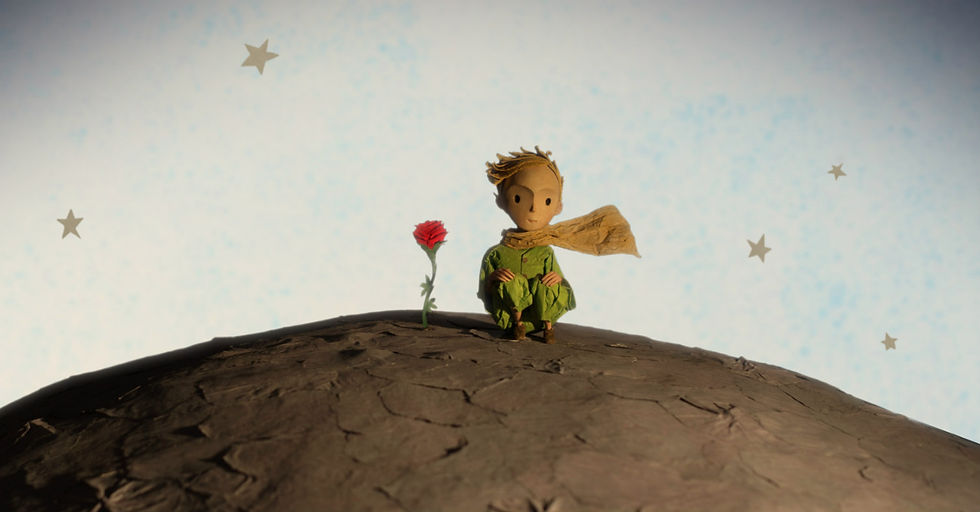
Some classics survive because they tell extraordinary stories. Others survive because they ask ordinary questions in an extraordinary way. The Little Prince is one of those books.
On the surface, it is a simple story about a young prince travelling between planets and meeting different characters along the way. But underneath that simplicity are questions about friendship, love, loneliness, responsibility and the strange habits of adults. What makes the book particularly enduring is that it doesn't seem to belong entirely to children or adults.
A child can enjoy its story. An adult may pause at its questions. And perhaps someone reading it years later will discover something completely different. This is another quality that many classics share: they leave room for the reader to bring their own life into the story. The book doesn't have to explain everything.
Sometimes the most lasting stories are the ones that leave us with something to think about after the final page.
Do classics need to be universally loved?
Not at all. A book can be considered a classic and still not be everyone's favourite. You might find Little Women slow. You might not connect with Alice’s Adventures in Wonderland. You might read The Little Prince and wonder what everyone else sees in it. That's perfectly fine.
Being a classic doesn't mean a book has to create the same emotional response in every reader. In fact, part of the beauty of reading is that we don't all need to find the same meaning in the same story. A classic can survive precisely because different generations keep interpreting it differently.
One reader finds comfort. Another finds humour. Another discovers a philosophy for living. Another simply enjoys the story. There doesn't have to be one correct way to read a book.
Why some books survive generations
Perhaps the simplest answer to the question “What makes a book a classic?” is this: It continues to give people a reason to read it. Not because someone tells us that we should. Not because it has been printed for a hundred years. Not because it appears on a reading list.
But because someone, somewhere, keeps opening the first page and discovering that the story still has something to say. A classic survives when it can cross the distance between its original world and ours. It can travel from one generation to another without losing its ability to make us laugh, wonder, question, feel understood or see something differently.

And maybe the most beautiful part is that every new reader adds something to the life of the story. Your experience becomes part of its history. Then you pass it on. And someone else reads it years later.
Perhaps a classic is simply a book we don't finish leaving behind
We often think of books as objects with an ending. We reach the final page, close the cover and move on. But some stories don't really end there. They return when we encounter something familiar.
A character's decision suddenly reminds us of our own. A sentence makes sense in a way it didn't before. A story we once considered childish suddenly feels deeply adult. Maybe that is what makes a book timeless. Not that it remains exactly the same forever, but that it keeps changing with the people who read it.
The world will continue to change. Our lives will change. The way we communicate, work, love and understand ourselves will change too. And yet, somewhere on a bookshelf, there may still be a story written a hundred years ago waiting for someone to open it. Perhaps that's the real test of a classic. Not how long it has existed, but how long it continues to matter.
Discover the Classics at SAGE Space
From childhood favourites to stories that have travelled across generations, the books at SAGE Space offer plenty of opportunities to revisit an old story — or discover one for the first time.

You never quite know what a classic will mean to you until you read it. And perhaps the best time to read one is not when someone tells you that you should, but when you're ready to discover what it has to say to you.
Explore the bookshelves at SAGE Space and find your next story.


Comments