
Why Does The Little Prince Feel Different When We Read It as Adults?
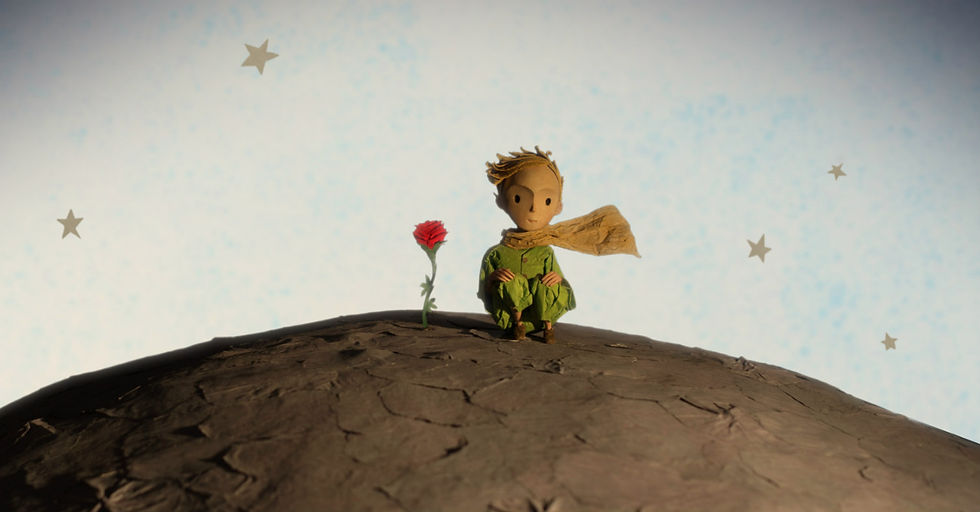
There are some books we read once and remember. And then there are books we read again years later and realise that, somehow, we have changed more than the book has. The Little Prince is one of them.
At first glance, Antoine de Saint-Exupéry’s classic seems almost impossibly simple. A little prince travels from planet to planet, meeting strange adults along the way, before arriving on Earth and encountering a fox, a rose and a stranded pilot in the desert. It looks like a children’s story.
But read it again as an adult, and something feels different. The planets seem less whimsical. The adults seem less ridiculous. The conversations feel more familiar. And suddenly, a story we once thought was about a little prince begins to feel like a story about ourselves.
The Adults in the Story Aren’t Really Strangers
One of the most memorable things about The Little Prince is the adults the prince meets during his journey. There is the King, who wants to rule everything. The Conceited Man, who wants to be admired. The Drunkard, trapped in a cycle he cannot escape. The Businessman, endlessly counting stars because he believes they belong to him. And the Lamplighter, who follows his instructions without stopping to question whether those instructions still make sense.
As children, these characters can seem funny. As adults, they can feel uncomfortably familiar. We recognise the person who is always chasing recognition. The person who measures success by numbers. The person who is so busy following expectations that they no longer remember why they started.
Saint-Exupéry never gives these characters complicated backstories. They are almost caricatures. And perhaps that is exactly the point. Each one represents a way of living that can become so normal that we stop noticing how strange it is.

The businessman counts his stars, but never enjoys them. The king wants authority, even when there is no one to rule. The lamplighter keeps working, even though the conditions of his work have become absurd. None of them are necessarily cruel people.
They are simply absorbed in something that has become more important than everything else. That is what makes them more interesting when we read the book as adults. The question is no longer, Why are these grown-ups behaving so strangely? It becomes: Which planet would I be living on?
When Did We Stop Asking Why?
Perhaps the most important contrast in The Little Prince is not between children and adults. It is between curiosity and certainty. The Little Prince asks questions. He wants to know why. He notices things adults have learned to ignore. He is interested in sunsets. He worries about his rose. He wants to understand other people.
Adults, meanwhile, are often concerned with facts that can be counted, measured or explained. How old are you? How much does your house cost? How much money do you have? How many stars do you own? These questions aren't necessarily meaningless. But the book asks us to consider what happens when they become the only questions we know how to ask.

Modern life often rewards this way of thinking. We measure productivity by numbers. Success becomes a title, a salary or a list of achievements. Time becomes something to optimise. Even our hobbies can become goals: how many books we read, how many kilometres we run, how many hours we spend learning something new.
There is nothing inherently wrong with measurement. But The Little Prince quietly reminds us that not everything important can be counted. A friendship cannot be reduced to a number. Neither can love. Neither can the feeling of returning to a place that reminds you of home. Perhaps growing up isn't about learning to stop asking questions. Perhaps it is about remembering which questions are worth asking.
The Rose: Why Do We Become Attached?
The Little Prince’s relationship with his rose is one of the most important parts of the story. At first, he is confused by her. She is beautiful, but also proud and demanding. He doesn't quite know how to understand her, and eventually leaves his planet. Only after meeting other roses does he begin to understand something important.
His rose is not special because she is the only rose in existence. She becomes special because of the time he has given her. He has watered her. Protected her. Listened to her. Stayed with her. In other words, attachment creates meaning. This is one of the book's most beautiful ideas because it changes the way we think about value.

We often assume that valuable things are valuable because they are rare or objectively exceptional. But perhaps some things become precious simply because we have invested part of our lives in them. A favourite chair. A neighbourhood café. An old photograph. A childhood book. A person we have known for years.
None of these things may be remarkable to someone else. But they don't need to be. Their meaning comes from the relationship we have built with them. And that is why the rose matters. She isn't perfect. She is simply his rose.
The Fox and the Meaning of Connection
Then comes the fox. The fox teaches the Little Prince about something the rest of his journey has been leading toward: connection. Before the Little Prince meets him, the fox is simply another fox. After they spend time together, they become important to one another.
The fox describes this process as being “tamed” — creating ties between two beings who were previously strangers. It is a simple idea, but one that becomes more complicated the older we get. Because relationships require time. And time is exactly what modern life often tells us we don't have.

We can communicate instantly with almost anyone in the world, yet meaningful relationships still cannot be rushed. Knowing someone takes attention. Friendship takes repetition. Love requires presence. Trust grows slowly. The fox's lesson is therefore not simply about love.
It is about the time we choose to give. In a world where we are constantly encouraged to move faster, the book suggests that some of the most meaningful things in life can only exist because we were willing to slow down long enough for them to grow.
What Changes When We Read It Again?
Maybe The Little Prince doesn't actually change. We do. When we're young, we might remember the fox. Later, we might understand the rose. Years after that, perhaps the businessman suddenly feels a little too familiar.
A different sentence catches our attention. A different character makes sense. A different part of the story stays with us. That is one of the quiet pleasures of rereading. The book becomes a kind of mirror. We don't return to exactly the same story because we aren't returning as exactly the same person.
And perhaps that is why certain books deserve a permanent place on our shelves. Not because we will read them every year. But because we know that, whenever we do return, there may be something waiting for us that we weren't ready to notice before.
Maybe Growing Up Isn't the Problem
There is a tendency to read The Little Prince as a story that tells us not to become like adults. But perhaps that is too simple. Growing up isn't the problem. We need responsibilities. We need knowledge. We need to make decisions, earn money, solve problems and take care of one another.
The question is what we lose along the way. Can we become adults without losing our curiosity? Can we become ambitious without reducing everything to numbers? Can we become independent without forgetting that we need other people? Can we become busy without convincing ourselves that being busy is the same as living?
Maybe the real invitation of The Little Prince isn't to become a child again. It is to carry some of the child's way of seeing into adulthood. To notice. To wonder. To ask why. To care about things that cannot be measured.
And, occasionally, to look at something familiar and allow ourselves to see it as if it were new. Perhaps that is why we keep coming back to The Little Prince.
The story stays the same.
But we don't.


Comments