
When a Book Changes the Way You Look at the World

There are books we read for a good story. And then there are books that quietly follow us after we close them. Not because we remember every character or every plot point, but because somewhere along the way, they changed the way we looked at something familiar. A conversation. A relationship. The way we spend our time. The world we take for granted.
Sometimes, that is what makes reading so interesting. A book does not necessarily have to give us an answer. It can simply introduce a question that stays with us.
Here are a few books from the shelves at SAGE Space that might do exactly that.
Fahrenheit 451 and the things we stop paying attention to
Ray Bradbury's Fahrenheit 451 imagines a world where books are forbidden and destroyed. But beneath its dystopian premise lies a question that feels increasingly relevant: what happens when we become so surrounded by entertainment, noise and information that we no longer have the space to think?
The book is not only about books being burned. It is also about distraction. About a world in which people are constantly occupied but rarely present. A world in which difficult thoughts are avoided and silence becomes uncomfortable.

Reading Fahrenheit 451 today can feel strangely different from reading it as a simple work of science fiction. We live with more information than Bradbury's characters could have imagined. Yet having access to information and truly paying attention are not necessarily the same thing.
Perhaps that is one reason books continue to matter. Reading asks something increasingly rare from us: time and attention.
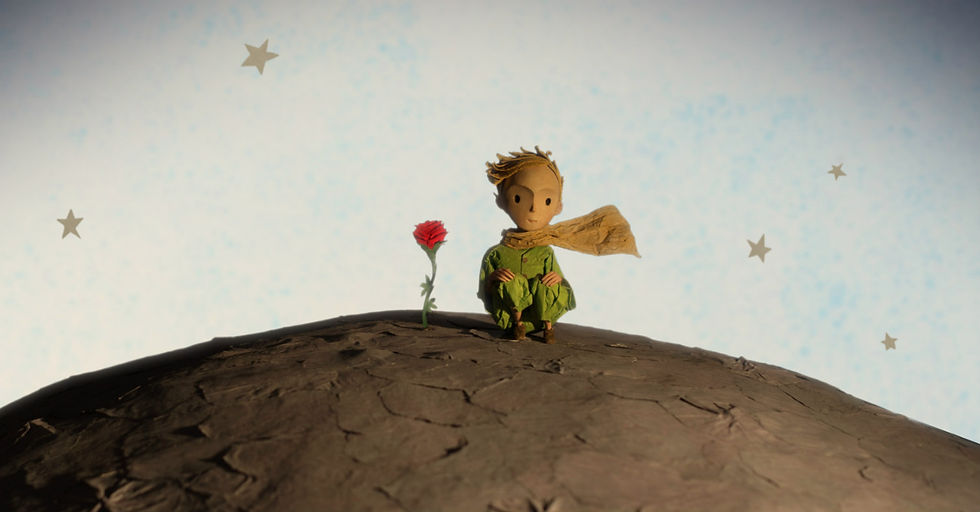
The Boy Who Lost His Spark and finding your way back to yourself
Sometimes the books that speak most clearly about adulthood are written in a form that appears deceptively simple. The Boy Who Lost His Spark begins with an idea many of us might recognise, even if we would never describe it in exactly the same words: what happens when someone loses the thing that once made them feel alive?
There are periods in life when everything can appear perfectly functional from the outside. We continue going to work. We meet people. We complete what needs to be done. And yet, somewhere along the way, something feels missing. We might call it motivation. Curiosity. Excitement. Or perhaps, like the book, we could simply call it a spark.

Stories like this remind us that losing our sense of direction does not necessarily mean something has gone permanently wrong. Sometimes it simply means we need to slow down long enough to notice what has changed.
And perhaps more importantly, to remember that the version of ourselves we are trying to find again may not be waiting somewhere in the past. It might be waiting somewhere ahead.
Beartown and the communities we choose to belong to
Fredrik Backman's Beartown begins with a small town and a hockey team, but it soon becomes a much larger story about belonging. What do we do when the people around us expect loyalty? What happens when loyalty conflicts with truth? And how much of our identity is shaped by the communities we belong to?
One of the strengths of Beartown is that it understands communities as complicated places. They can give us connection and identity. They can make us feel supported. But they can also ask us to stay silent.

Reading the book makes it difficult to separate individual choices from the environment around them. People rarely make decisions entirely alone. Families, friends, workplaces and communities all create invisible expectations about who we should be and how we should behave.
Perhaps that is why stories about small communities can feel surprisingly universal. Most of us belong somewhere. And at some point, we may have to ask ourselves what that belonging asks of us in return.
Project Hail Mary and the pleasure of not knowing what comes next
Not every book that changes the way we think has to be serious or heavy. Andy Weir's Project Hail Mary is a reminder of something equally valuable: the pleasure of curiosity.
At its heart, the experience of reading is built around not knowing. We turn the page because we want to find out what happens next. We encounter a problem and wonder how it can possibly be solved.

Somewhere between childhood and adulthood, many of us become increasingly uncomfortable with not knowing. We want plans. Answers. Directions. But curiosity begins precisely where certainty ends.
A story like Project Hail Mary invites us back into that state of mind. It allows us to follow questions without immediately demanding answers. To enjoy discovery for its own sake. And perhaps that is something worth carrying outside the pages of the book as well. Not everything needs to be understood immediately.
Sometimes it is enough to remain curious.
The Nightingale and the stories we think we already know
History is often remembered through major events and famous names. But novels have a way of taking us behind those events and asking us to look at the lives of people who might otherwise remain invisible.
Kristin Hannah's The Nightingale is a powerful example of this. Set during the Second World War, the novel explores how ordinary lives are transformed by extraordinary circumstances. It reminds us that history is not experienced as history while we are living through it.

People do not wake up knowing that they are about to become part of a story that will later be taught in schools. They are simply trying to make decisions with the information they have, protect the people they love and survive the consequences of events larger than themselves.
Perhaps this is one of the things fiction does best. It makes distant events feel human again. It takes something we believe we already understand and asks us to imagine what it might actually have felt like to be there.
Why We Sleep and the things we consider optional
Not all important books are novels. Sometimes a book changes the way we see something so ordinary that we rarely question it. Sleep, for example. In a culture that often celebrates productivity and being busy, sleep can easily become something we treat as flexible. Something to sacrifice when there is too much work to do.
Why We Sleep asks us to reconsider that assumption. Whether we agree with every conclusion in a book or not, one of the most valuable things a good non-fiction book can do is make an ordinary part of life worth examining again.

We spend an enormous part of our lives sleeping. And yet many of us understand surprisingly little about it. Perhaps reading does not always need to introduce us to something completely unfamiliar. Sometimes it simply helps us notice what has been there all along.
The books we carry with us
The best books do not always announce their importance while we are reading them. Sometimes we finish them and move on. Then, weeks or months later, we encounter a conversation or a situation that brings a particular scene back to mind.
A question from a book suddenly becomes our own question. A character's decision makes us reconsider one of our own. This is perhaps one of the quietest pleasures of having books around us. We cannot always predict which one will matter, or when.
A science-fiction novel might make us think about curiosity. A dystopian story might make us reconsider how we spend our attention. A novel about a small town might change the way we think about belonging. The right book does not always arrive with a clear message.
Sometimes, it simply gives us a new way of looking at something we thought we already knew. And that can be enough.
Explore these books and more on the shelves at SAGE Space.


Comments